Over the past few years, I've noticed a shift away from predominantly white exteriors reigning as the epitome of modern design, toward the incorporation of moodier, earthier tones. This pivot isn't entirely surprising. Interior design has undergone a similar evolution, with the all-white, spaces that once dominated giving way to warmer, cozier and more colour-drenched interiors.
What's interesting about exterior design, however, is that the shift isn't as simple as choosing a darker colour for your home's siding. Rather, I think we're seeing a more intentional approach to how colours and materials are selected, paired and applied. Texture, architectural form and the relationship between materials are becoming just as important as the colours themselves.
Natural Materials & Material-Led Contrast
In an age of mass production, there's been a growing appreciation for natural and handcrafted elements in home design. From natural wood flooring and stone countertops to handmade ceramics, materials with texture, variation and a sense of authenticity are taking center stage. This appreciation for natural materials is translating to exterior design, particularly through the use of wood siding and oversized or irregular statement stone.
When wood is introduced, its placement is often just as intentional as the material selection itself. Traditionally, wood accents have been concentrated in areas that reinforce the architecture and highlight specific design features, such as front entry doors, soffits and porch ceilings, garage doors and recessed entryways. While these applications remain popular, we're also seeing wood take on a much larger role, with entire wall faces clad in wood siding rather than being limited to smaller architectural accents.
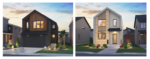
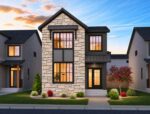
Similarly, when stone is incorporated, it is often applied across the full expanse of a wall or architectural feature in a few carefully selected locations. In many cases, the remainder of the home is clad in one, or at most two, siding profiles that share the same colour, including the accompanying trim.
The intention is clear: let the natural materials be the star of the show. By keeping surrounding finishes deliberately understated, designers are allowing the texture, scale and natural variation of wood and masonry to introduce depth, warmth and visual interest without relying on contrasting siding colours or competing finishes.
A New Approach to Tonal Detailing
One of the more interesting developments in exterior design is how differently trim, windows and other architectural details are being treated in recent years. I'm noticing two distinct approaches emerging, both of which create very different results.
On one hand, there's a renewed emphasis on contrasting details. Window frames, fascia, trim and other architectural elements are being intentionally coordinated in a single colour that contrasts with the main siding, bringing attention to features that might otherwise go unnoticed. Rather than relying on premium masonry or multiple siding materials to create visual interest, this approach uses colour to define and highlight the architectural details of a home.
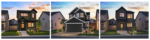
On the other hand, monochromatic exteriors are becoming increasingly popular. Here, siding, trim and other exterior elements are selected within the same colour family, creating a cohesive, almost seamless appearance. By minimizing contrast between materials, the focus shifts away from individual details and toward the overall proportions and structure of the home.
While these approaches are quite different, both demonstrate how thoughtfully applied colour can influence the character of an exterior. Whether it's used to emphasize architectural details or create a more unified appearance, the treatment of trim, windows and other architectural elements plays a much more significant role in the overall composition than we might initially realize.
A Shift Toward Warmer Neutrals
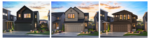
Interestingly, the growing preference for natural materials is also being reflected in our colour choices. As homeowners gravitate toward materials that feel more organic and authentic, they're also embracing palettes inspired by the natural landscape.
For a long time, crisp white, black and dark grey were the go-to choices for achieving a clean, modern exterior. While these colours certainly aren't going anywhere, we're seeing a shift toward warmer, more nuanced alternatives. Creams and warm whites are increasingly taking the place of stark white, while browns, mushroom and taupe tones are offering an alternative to the charcoal and black shades that have dominated contemporary exteriors. Earthy greens are also growing in popularity, proving versatile across a range of architectural styles.
These softer, more organic palettes pair particularly well with stone, wood and other textured finishes, creating exteriors that feel modern and sophisticated while introducing a little more warmth and depth.
Bringing It All Together
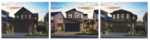
Overall, what ties these approaches together isn't necessarily a particular colour, material or architectural style. It's a shift toward more intentional exterior design.
Modern exteriors are becoming less about selecting a trendy colour combination and more about understanding how materials, colours, textures and architectural forms work together to create a cohesive home. Whether it's allowing natural stone to take center stage, using wood to emphasize architectural features, or taking a more restrained approach to colour and trim, the goal is to create visual interest through thoughtful composition rather than an abundance of competing finishes.
Ultimately, the most successful exterior palettes aren't just about the colours themselves, but how those colours and materials come together to complement the architecture and give a home its own distinct character.
Story by Emily R.
- Architectural & Community Design Specialist